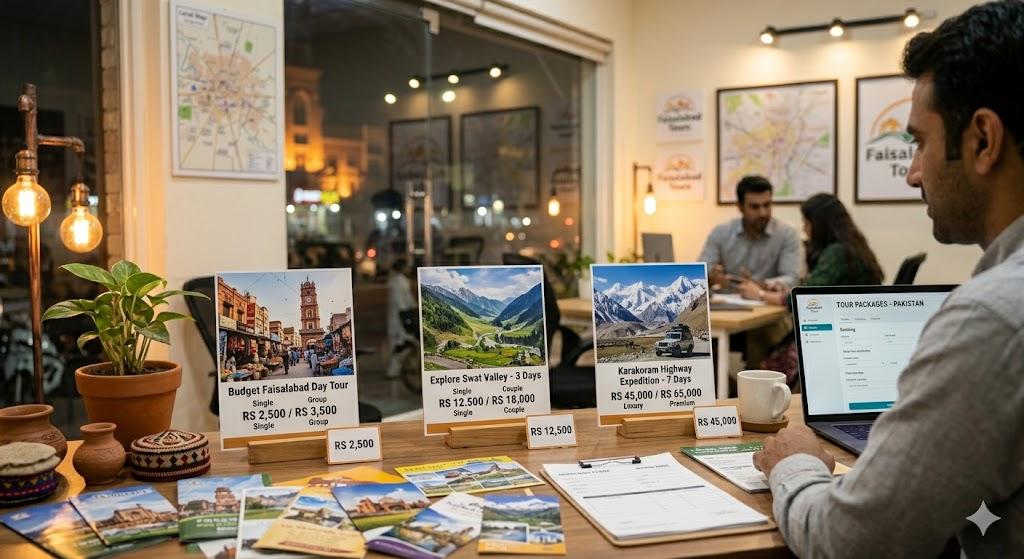
Quick answer (April 2026): The 4 highest-leverage pricing moves: (1) anchor with the premium tier first (makes mid-tier feel cheap), (2) three-tier pricing with "Most Popular" badge on middle (~70% pick the middle), (3) per-person not group price (lower mental anchor), (4) show what's included before the price (reframes value). Together these typically increase tour revenue 10–25% without lowering rates.
Tour pricing isn't just about covering your costs and adding a margin. How you present the price, structure your options, and frame the value directly determines how many travelers click "Book Now." This guide covers the pricing psychology principles that drive booking conversions, with specific examples for tour operators. Research on consumer behavior shows that pricing presentation affects purchase decisions significantly, which is why these tactics work.
The Anchor Effect: Show the Expensive Option First
When travelers see your tour options, the first price they encounter sets their mental anchor. If the first thing they see is your premium private tour at $350 per person, your shared group tour at $89 feels like a deal by comparison.
How to apply this for tours:
List your tour options from highest price to lowest on your website. Private tour ($350), small group ($129), standard group ($89). This is counterintuitive (most operators list cheapest first), but it works because the traveler's brain compares every subsequent price to the first one they saw.
Display the per-person price prominently, not just the total. "$89 per person" feels more accessible than "$356 for a family of four," even though it's the same amount. Let the booking widget calculate the total; lead with the individual price.
Three-Tier Pricing: The Decoy Effect
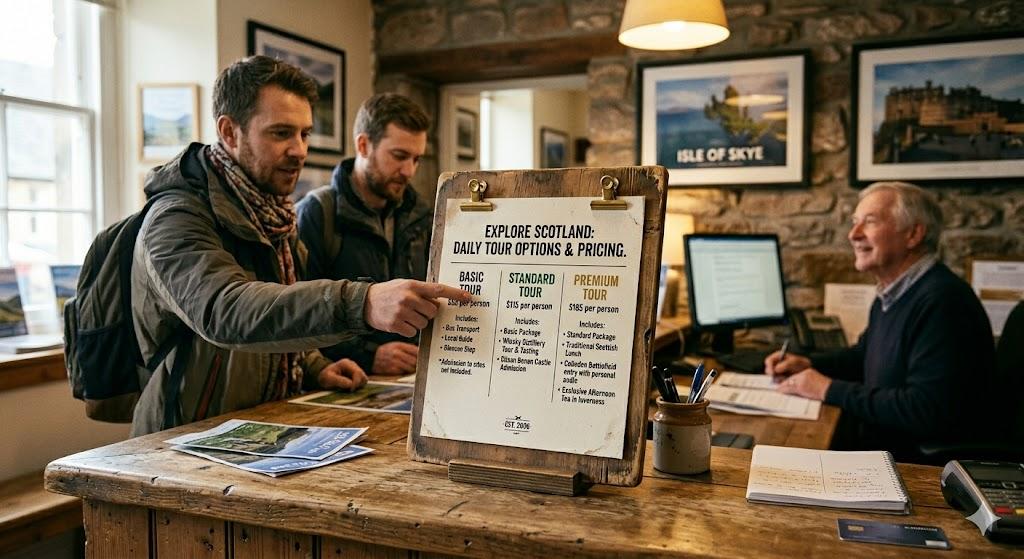
Offering exactly three price options dramatically increases conversions for the middle option. This is called the decoy effect. The lowest tier makes the middle feel reasonable, and the highest tier makes the middle feel smart.
Tour pricing tier structure that works:
Basic Tour ($79): The core experience, 2-hour guided snorkeling at one reef site. Shared group of up to 20. Equipment included. No photos.
Popular Tour ($119): 3-hour guided snorkeling at two reef sites. Shared group of up to 12. Equipment included. Professional photos included. Complimentary drinks.
Private Tour ($249): 3-hour private snorkeling at two reef sites. Just your group with a dedicated guide. Equipment included. Professional photos and video. Complimentary drinks and snacks. Flexible schedule.
Label the middle option as "Most Popular" or "Best Value." This social proof label combined with the price positioning pushes 50-60% of bookings to the middle tier, which is typically your highest-margin option. To maximize the impact of social proof, see our guide on tour reviews and social proof.
The basic tier exists primarily as a price anchor. The private tier exists to make the middle tier look reasonable. Your goal is to sell the middle tier in volume. Use the free pricing tier generator to build a three-tier structure with the right anchors for your tours in a couple of minutes.
Charm Pricing vs. Round Numbers for Tours
Charm pricing ($89, $119, $249) works for tours priced under $200 because it signals a deal. Round numbers ($90, $120, $250) work better for premium and luxury tours because they signal quality and confidence.
If your target customer is a budget-conscious traveler looking for the best deal, use charm pricing. If your target customer is a luxury traveler who equates higher prices with better experiences, use round numbers.
For most mid-range tour operators, charm pricing on standard tours and round numbers on private/premium tours is the optimal approach.
The "Per Person" Frame
Always display per-person pricing rather than total group pricing as the primary number on your tour page. This applies even if most of your bookings are for couples or families.
"$89 per person" versus "$178 per couple". The per-person frame makes the purchase decision feel smaller, even though the total cost is identical. The traveler evaluates "$89 for an experience" rather than "$178 out of my wallet."
Your booking widget should show per-person pricing and then calculate the total dynamically as guests select their party size. Let the total reveal itself gradually rather than leading with it.
Scarcity and Urgency: Use Honest Numbers
Genuine scarcity increases booking speed. When travelers believe spots are limited, they make faster decisions rather than bookmarking and forgetting.
What works: Real-time availability displayed on your booking widget. "6 spots remaining for March 22" when pulled directly from your booking system. This is honest, helpful, and motivating.
What damages trust: "Only 2 spots left!" displayed permanently on every tour regardless of actual availability. "LAST CHANCE!" banners that never go away. Fake countdown timers. Travelers are sophisticated enough to spot manufactured urgency, and it destroys the trust you need for them to hand over their credit card. Research from Harvard Business Review on pricing strategy shows that trust-based tactics outperform manipulation long-term.
Seasonal messaging is a legitimate form of urgency: "Whale watching season ends April 15" or "Cherry blossom tours available March 20 - April 10 only." These tie urgency to real conditions that travelers can verify.
Bundle Pricing: The Perceived Savings Effect
Tour bundles (activity combos, multi-day packages) convert well because travelers perceive they're getting a deal, even when the discount is modest. These bundles also work well for direct bookings, which is central to the strategy outlined in reducing OTA commissions.
Bundle structure for tour operators:
Individual tours priced at $89 (snorkeling) + $79 (kayaking) + $99 (sunset cruise) = $267 if booked separately.
"Adventure Bundle: All three tours for $229" is a 14% discount that feels significant because the traveler can see the math. The bundle price should always be displayed next to the individual prices with a strikethrough.
Bundles also increase your average booking value. A traveler who came to your site for a snorkeling tour at $89 might book the $229 bundle because the marginal cost of adding two more tours feels small. When optimizing bundles for booking systems, review our guide to best booking systems for tour operators.
Early Bird vs. Last Minute Pricing
Dynamic pricing based on booking timing can increase both early bookings and fill last-minute availability.
Early bird pricing: Offer 10-15% off for bookings made 30+ days in advance. This smooths your cash flow, helps with guide scheduling, and gives you confirmed numbers well ahead of the date. Market early bird pricing to your email list and repeat customers.
Last-minute pricing: If you have unsold spots 48-72 hours before a tour, consider offering a "last minute" rate on your website or through a dedicated email blast. A 15-20% discount to fill otherwise empty seats is pure incremental revenue.
Important: Never discount below your variable cost per guest (the cost of adding one more person to an already-running tour). If your variable cost is $15 per guest for equipment, fuel, and snacks, your floor price is $15. Anything above that is marginal profit on an otherwise empty seat.
Price Display Best Practices for Tour Websites
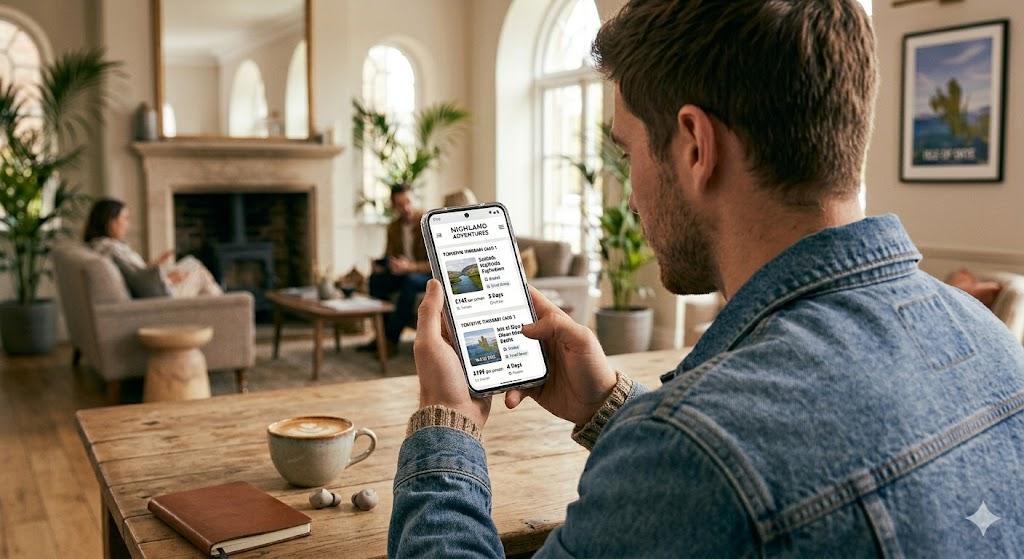
Show the price on the tour listing card, not just on the detail page. Travelers who can see prices while browsing your tour catalog spend more time on your site and are more likely to click through to book. Hiding prices behind a "View Details" click loses 20-30% of potential browsers.
Display "Starting from" pricing if your tour has variable pricing based on group size, date, or options. "$89 per person" is better than no price, even if some configurations cost more.
Include what's in the price directly next to the number. "$89 per person: includes equipment, guide, photos, and marine park fees." Travelers who understand what's included convert better than those who worry about hidden extras. For a more detailed look at checkout presentation, see our guide on tour website checkout UX fixes.
Show the OTA comparison subtly. If your tour costs $89 direct and $109 on Viator, you can mention "Book direct and save" or "Direct booking price" without explicitly calling out the OTA price (which may violate OTA terms). The implication is clear. This is part of the larger strategy covered in reducing OTA commissions for tour operators.
Testing Your Pricing
Don't set prices once and forget them. Run pricing tests every quarter:
Test two price points on the same tour by alternating weekly. Track total revenue (not just bookings). A higher price with slightly fewer bookings may generate more total revenue.
Test different tier structures. Does a two-tier model (standard vs. private) outperform a three-tier model? It depends on your specific market. Need test ideas? The A/B test idea generator suggests high-leverage experiments for tour pages, from price framing to badge placement.
Track your price-per-lead metric: divide your monthly marketing spend by the number of bookings. If raising prices reduces bookings but increases total revenue and reduces your cost per lead, the price increase is working.
Pricing is one of the highest-leverage changes you can make to your tour business. A 10% price increase with the same booking volume goes directly to your bottom line.
Pricing and page structure work best together. Our booking optimization service tests price presentation, tier layout, and checkout flow as a single conversion program.