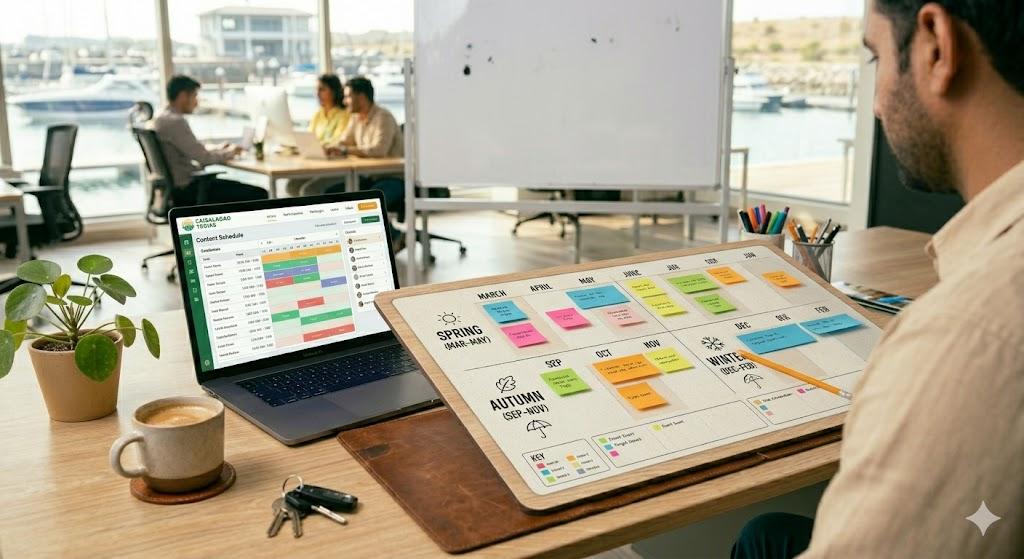
Most tour operators market reactively, scrambling for bookings when they notice empty tours and cutting back when they're full. A proactive marketing calendar aligned with traveler booking patterns fills tours more consistently and at higher margins. This guide provides a month-by-month framework that you can adapt to your specific destination and season.
Understanding the Tour Booking Cycle
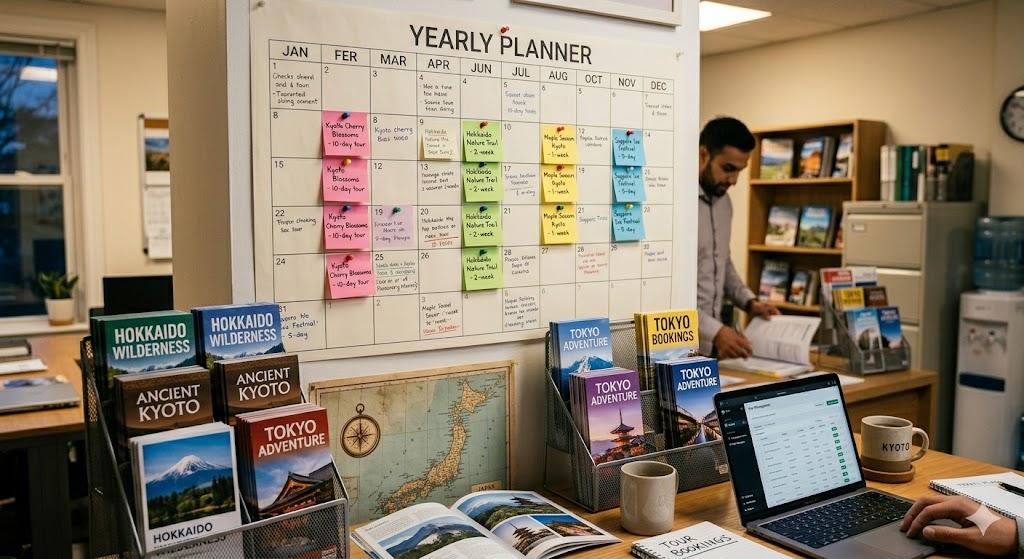
Travelers book tours at different lead times depending on the tour type, price point, and destination. Understanding your booking window is essential for timing your marketing correctly.
Short booking window (1-7 days): Budget tours, walk-up activities, spontaneous day trips. These bookings come from travelers already at the destination. Marketing focus: Google Ads targeting "things to do in [destination] today/tomorrow," local hotel partnerships, and walk-up signage.
Medium booking window (2-8 weeks): Mid-range tours, multi-activity packages, and seasonal experiences. These bookings come from travelers in the active planning phase. Marketing focus: Google Ads, SEO content, email campaigns, and social media.
Long booking window (2-6 months): High-ticket private tours, multi-day expeditions, and peak season bookings. These come from travelers planning well in advance. Marketing focus: Early bird campaigns, content marketing, travel agent partnerships, and retargeting ads.
Your marketing calendar should work backwards from your peak season, accounting for your typical booking window.
Off-Season (4-6 Months Before Peak): Foundation Building
This is when most operators stop marketing entirely, and it's exactly when you should be investing in your foundation.
Content creation and SEO. Write and publish your blog posts, destination guides, and updated tour descriptions during off-season. Google needs 2-4 months to index and rank new content, so content published now will be generating organic traffic when peak season arrives. Align your content with a comprehensive SEO keyword strategy to target high-intent search queries.
Update every tour page with fresh details for the upcoming season: new photos from last season, updated pricing, any itinerary changes, and seasonal specifics ("Summer 2026 departures begin June 1").
Website optimization. Fix your checkout UX issues, improve page speed, update your booking widget, and test the entire booking flow on mobile. Making these changes during off-season means they're ready to capture peak traffic without disruption.
Review management. Respond to any unanswered reviews from last season. Reach out to past guests who didn't leave reviews with a "We miss you" email that includes a review link. Build your review count while competition for attention is lower. Strong reviews and social proof become your strongest marketing asset during peak season.
Email list building. Set up or refine your automated email sequences: abandoned booking recovery, pre-trip preparation, post-trip review request, and seasonal re-engagement. Test these with a small sample before peak volume.
Pre-Season (2-3 Months Before Peak): Demand Generation
This is when travelers start actively planning their trips to your destination.
Launch Google Ads campaigns. Start with a conservative budget ($200-$300/week) targeting your highest-converting keywords. By launching before peak season, you give the algorithm time to learn and optimize before you need maximum performance. Combine paid search with your Google Ads strategy to maximize visibility during high-intent search periods, or hand the build and management to our tour operator Google Ads service.
Send your seasonal re-engagement email to your entire past guest list. "Planning your next trip to [Destination]? Our 2026 season starts [Date]." Include any new tours, returning guest discounts, and a direct booking link. Craft these campaigns using proven email marketing strategies to maximize re-engagement rates.
Early bird promotions. Offer 10-15% off for bookings made 30+ days in advance. Promote this through email, social media, and a banner on your website. Early bookings improve your cash flow and help with guide scheduling.
Social media content. Shift from brand-awareness content to booking-driven content. Post your best photos and videos from last season with clear calls-to-action: "Book your [Tour Name] for summer 2026. Link in bio." Short-form video (Instagram Reels, TikTok) showcasing the tour experience drives the highest engagement for tour operators. Pinterest is an underrated channel for tours, the free Pinterest pin generator creates pin copy and descriptions optimized for travel-planning searches.
Travel agent and hotel outreach. Contact local hotels, travel agents, and concierge services with your updated tour menu, pricing, and commission structure. Provide them with printed materials and a simple booking link or phone number.
Peak Season Start (First Month): Scale and Optimize

As bookings start flowing in, your focus shifts to scaling what works and maximizing revenue.
Scale Google Ads budget. Increase to 2-3x your pre-season budget on campaigns that are converting profitably. Add new keywords based on search terms data from the pre-season period. Enable dynamic search ads to capture long-tail queries you haven't explicitly targeted.
Activate retargeting campaigns. Run retargeting ads on Google Display and Facebook/Instagram showing your tour to people who visited your website but didn't book. Retargeting audiences have 3-5x higher conversion rates than cold audiences.
Monitor and respond to reviews daily. Peak season generates your highest review volume. Respond to every review within 24 hours. Flag any operational issues mentioned in negative reviews for immediate resolution.
Weekly email sends. Send weekly "This week's availability" emails to your subscriber list highlighting tours with remaining spots. This creates urgency and fills specific departure dates.
Adjust pricing if needed. If certain departure dates are consistently selling out days in advance, consider testing a modest price increase on those dates. If other dates have persistent empty spots, consider a promotion.
Peak Season Mid (Month 2-3): Maximize Revenue
You're in the thick of peak season. The focus is on maximizing revenue from high demand and building assets for next year.
Capture content for next year's marketing. Designate specific departures as "photo days" where you or a photographer captures professional images and video. This content becomes your marketing foundation for next year's pre-season campaigns.
Launch high-margin upsells. If your standard tour is filling easily, introduce premium options: private upgrades, photo packages, extended itineraries, or VIP add-ons. Upsells have higher margins than base tour prices and capture revenue from guests willing to pay more.
Collect guest data systematically. Every direct booking adds to your email list. For OTA bookings, collect emails through your guides (offer to send photos or a local recommendations guide). Check your OTA terms of service regarding guest data collection. The more you shift toward direct bookings instead of OTA commissions, the more guest data you own and control.
Midseason pricing review. Compare your actual cost-per-booking, average booking value, and margin against your pre-season projections. Adjust pricing, ad spend, or tour scheduling based on real data.
Peak Season End (Last Month): Extend and Transition
As peak season winds down, the goal is to extend the season and prepare for the slower months.
Shoulder season promotions. Create special pricing or unique experiences for the first weeks after peak season. "September Special: Enjoy [Destination] without the crowds" appeals to travelers who prefer avoiding peak-season congestion.
Year-end email campaigns. Send "Thank you for an incredible season" emails to your entire guest list. Include a booking incentive for next year: "Book your 2027 [Tour Name] now and save 15%." This locks in revenue for next year and builds your advance booking base.
Content creation from peak season assets. Use the photos, videos, and guest testimonials collected during peak season to create blog posts, social media content, and marketing materials for next year.
Google Ads wind-down. Reduce ad spend gradually rather than shutting off abruptly. Some travelers book shoulder season tours, and maintaining a modest presence captures this demand. Pause campaigns only when the cost per booking exceeds your profitability threshold.
Off-Season Activities (Repeat Cycle)
Analyze the season's data. Which tours had the highest demand? Which had the best margins? Which marketing channels drove the most bookings at the lowest cost? Use this data to plan next year's tour lineup and marketing budget. Industry reports from Phocuswright provide benchmark data for tour operator pricing and booking patterns.
Run an annual website audit. Check page speed, mobile usability, broken links, outdated content, and SEO performance. Fix issues before the next pre-season push.
Invest in SEO content. Write 2-4 blog posts per month during off-season targeting long-tail keywords for next season. By the time peak season arrives, these posts will be indexed and ranking. Track what travelers are searching for during off-season using Google Trends and competitor analysis tools.
Build partnerships. Use the off-season to develop relationships with hotels, travel agents, tourism boards, and local businesses. These partnerships take time to establish and pay dividends during peak season.
Adapting This Calendar to Your Business
Year-round destinations (tropical, urban) don't have a true off-season but still experience booking fluctuations. Shift the calendar to align with your low/medium/high demand months rather than weather seasons.
Multi-destination operators should run separate calendars for each destination, as peak seasons rarely overlap perfectly.
The key principle is consistent, proactive marketing timed to traveler booking behavior, not reactive marketing driven by looking at next week's empty tours. Plan backwards from when you need bookings and start marketing when travelers are making decisions, which is always earlier than most operators think.
If executing a full-year calendar in-house isn't realistic, a specialist partner can own the cadence for you. Our tour operator marketing agency comparison covers how to pick one, and when your volume is too low to justify the spend.